Survivorship Bias in Customer Feedback: The Hidden Problem

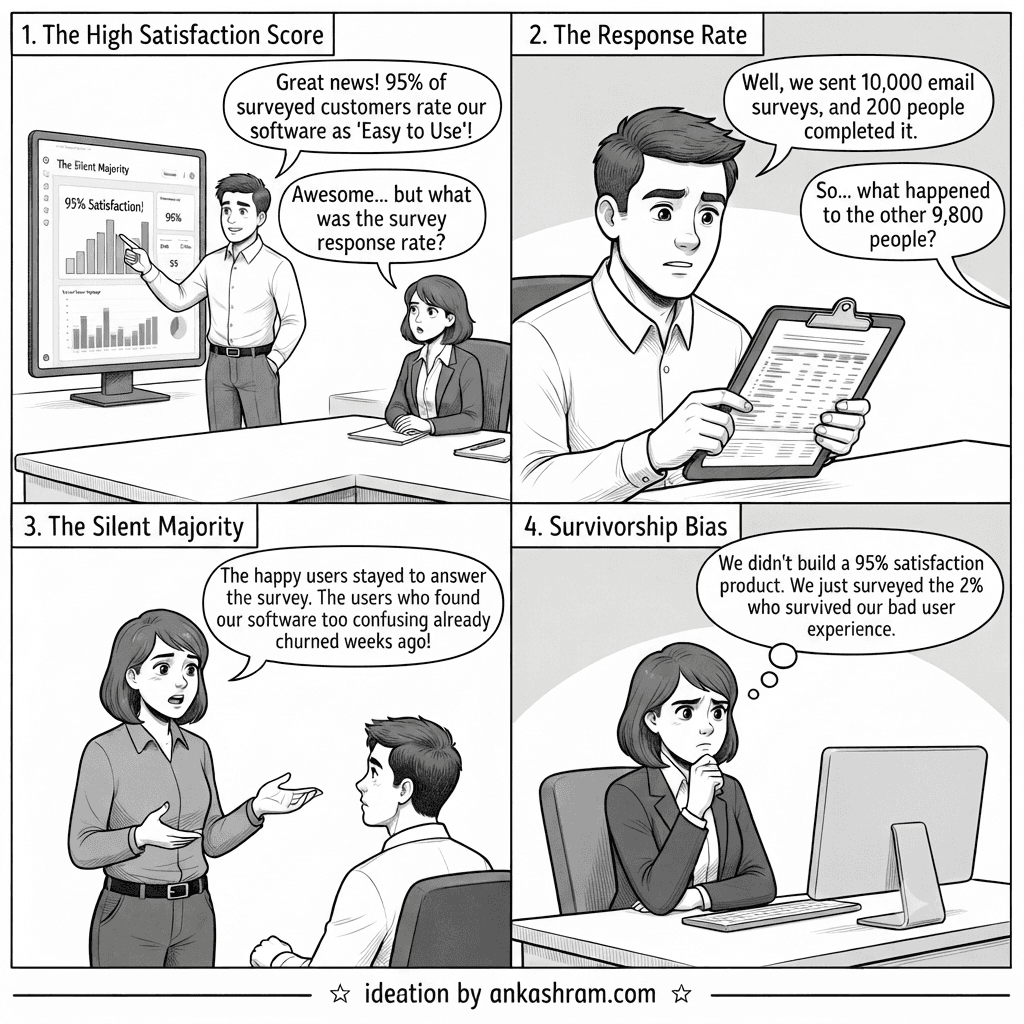
High customer satisfaction scores feel like a major win for product and support teams. However, when satisfaction metrics rely solely on voluntary surveys, they frequently fall victim to Survivorship Bias.
Satisfied customers are far more likely to remain active, open emails, and fill out feedback forms. Meanwhile, frustrated or confused users simply stop using the product, cancel their subscriptions, or delete the app—without ever taking a feedback survey.
When you evaluate feedback exclusively from active users, you aren’t measuring the quality of your overall product experience. You are only measuring the sentiment of the users who survived it.
How to Spot Survivorship Bias in Customer Feedback:
Track Non-Responders: Pay close attention to churned accounts and abandoned workflows, not just active power-users.
Low Response Rates: If a survey has a 2% completion rate, a “95% satisfaction” score represents less than 2% of your true audience.
Proactive Exit Interviews: Collect brief feedback at the exact moment of cancellation rather than relying on delayed email blasts.
Are you listening to all your customers, or just the ones who stayed long enough to reply?