10 KPIs Every Business Owner Should Know

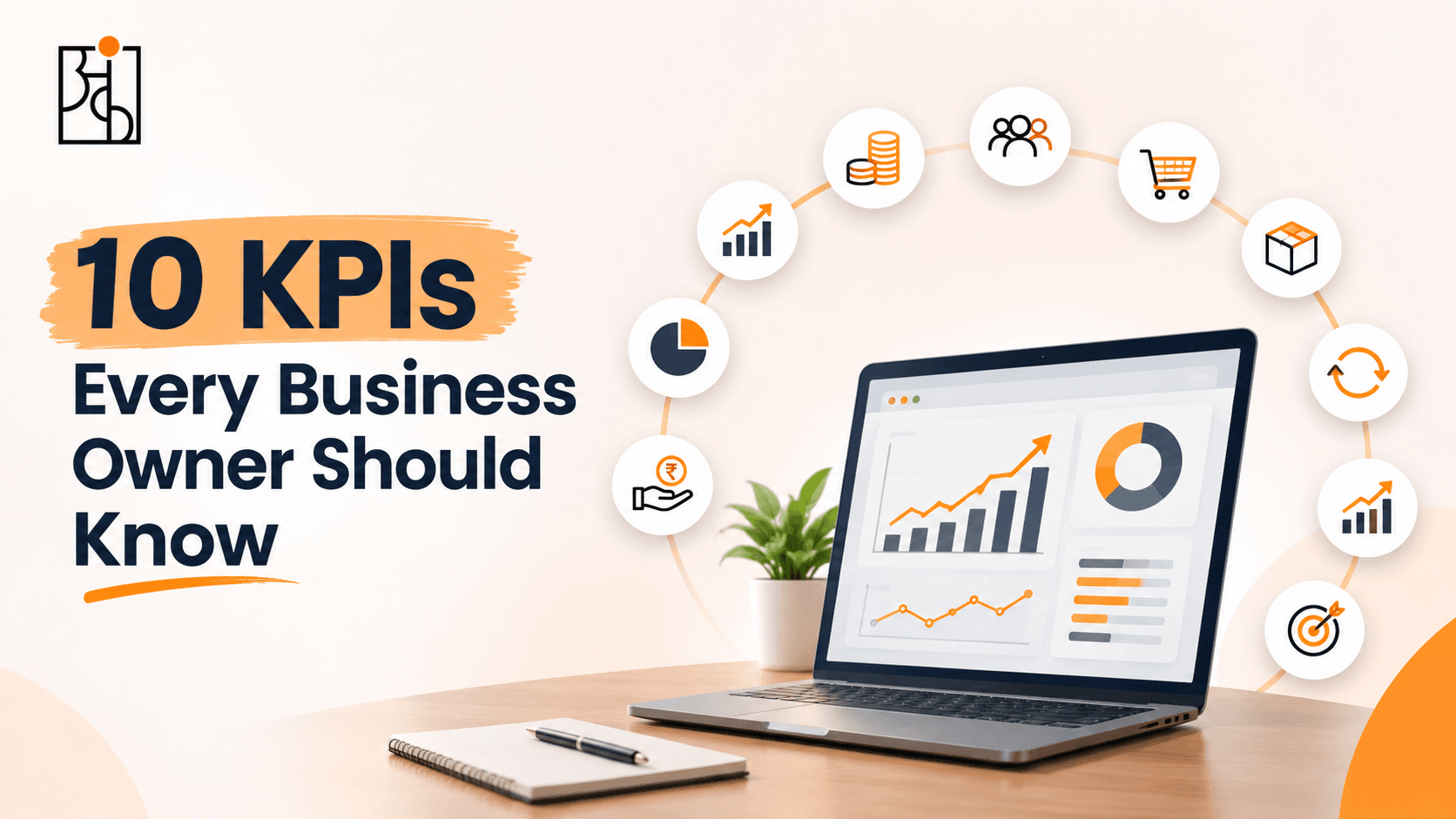
Every business owner makes daily decisions based on their gut, but the best decisions will be informed by a few simple metrics.
Table of Contents
Whilst you don’t want a long list of metrics, having a few key performance indicators will help you to know if your business is performing well, and where you need to focus your time. Here are the 10 most practical KPIs to consider regularly measuring.


1. Revenue
This is the simplest (but most important) measure to consider. Simply look at the total revenue generated within the time period, and how much this has changed as a % compared to the last time period/last year.
Why it matters: This is important to know if you are growing or staying the same. Often the growth rate will be more important than the actual figure itself.
2. Gross Profit Margin
Revenue minus costs of directly delivering your product/service. Expressed as a % of revenue.
Why it matters: Even if you have high revenues, if your margin is low then your business may be struggling. This metric will show you how much you’re left with after the direct costs of selling.
Read More: How to Improve Logical Thinking: A Practical Guide to Thinking Critically
3. Net Profit Margin
What is left over after all costs. Expressed as a % of revenue.
Why it matters: This is the bottom line! You’ll know how much profit you are actually making from your business.
4. Customer Acquisition Cost
Total sales and marketing costs divided by the number of new customers you’ve acquired.
Why it matters: If you are spending a lot to acquire a customer, it will be difficult to grow and will be expensive. This metric will help you to know if you are being efficient during your marketing/sales.
5. Customer Lifetime Value (LTV)
The total amount of revenue you would expect to receive from a customer throughout the whole relationship.
Why it matters: If your LTV is much higher than your CAC, you’ll have room to invest in growing your business. If it’s not much higher, or negative, you’ll need to take a look.
Read More: How to Improve Logical Thinking: A Practical Guide to Thinking Critically
6. Customer Retention (or Churn)
Percentage of customers retained during a specific period (or lost).
Why it matters: It’s usually cheaper and more profitable to keep your existing customers. Often an early indicator if you are losing more customers.
7. Cashflow
This is the actual income and expenditure your business is experiencing. Take a look at your operating cashflow.
Why it matters: Your business could look profitable on paper, however if you have a cashflow issue it could cause problems. This will help keep your lights on.
Read More: How to Think Like a Data Analyst (Even If You’ve Never Touched a Spreadsheet
8. Average Order Value (Transaction Value
Total revenue divided by number of orders.
Why it matters: Increasing the value of customers can be easier than finding new customers. This metric will tell you if you are increasing through upselling, bundling or price changes.
9. Conversion Rate
The % of leads/visitors/prospects turning into paying customers.
Why it matters: This will tell you how effective your sales process or website is. Even small increases can really make a difference.
10. Employee Productivity (Revenue per employee)
Total revenue divided by the number of employees.
Why it matters: As your team grows this will help you to know if you’re getting the same output from your team. This is a simple way to know if you are efficient.
Read More : Online vs Offline Data Analytics Course Which Is Actually Better?
How to measure these
You don’t need any complicated software to start with. Many of these can be measured using a good spreadsheet. Just ensure you have a consistent process to measure them. Some of these may be measured weekly, some monthly.
Start with the top 5 that seem to be most relevant to you at this point. As your business grows, add more metrics. Try to keep your metrics clear.
At Ankashram we offer practical programmes like our Think with Data programme that will help business owners and professionals to utilise these metrics and actually understand what they mean.
Tips
Be clear on what you want to measure. Everyone should be measuring the same metric.
Look at trends.
Add a brief comment on why the number is different.
Review your KPIs once or twice a year. Some will be more important depending on what stage your business is in.
Read More : Building Your First Power BI Dashboard (The Order Matters)
Frequently Asked Questions
Q1.How many KPIs should I be looking at?
Most business owners will be fine with 5-10 key KPIs. Too many can cause confusion and too few can leave you missing some key metrics.
Q2.How often should I review my KPIs?
Depending on the metric. Often revenue, cashflow and conversions will be looked at weekly. Margins, retention and LTV are usually done monthly or quarterly.
Q3.Do I need any expensive software?
No! Most small and growing businesses will be okay with a clean spreadsheet. Once you have a large amount of data or users, software like Power BI or dashboards can be useful.
Q4.Some of these aren’t easy to measure?
Measure the ones you can. Over time you can improve the data you have. It’s better to have an approximate number, and measure it consistently.
Q5.How does Ankashram use KPIs?
We focus on practical KPIs that help people see how the numbers relate to their business.
Q6.Should I share these with my team?
Yes, most of the time. When people understand what numbers matter they can align their actions. Keep your list short and explain what they mean.
A good set of KPIs will help you to understand what is going on within your business, and allow you to be more confident taking actions. By focusing on a few simple metrics and measuring them consistently you can improve the quality of many decisions over time.